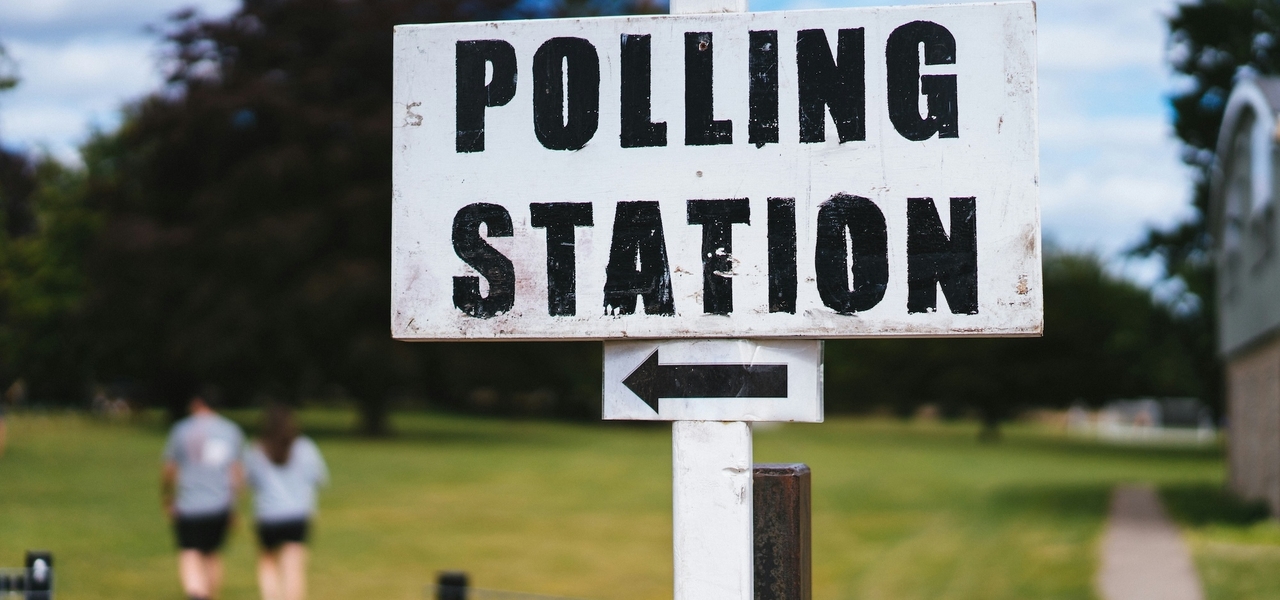

One person has one vote, for one candidate, which produces one MP. The First Past the Post system used in Britain for its general elections is remarkably simple. Of course, like everything, it has its fans and its detractors.
Notable in the criticism is the concern that it is unrepresentative and limits choice. For example, a voter might wish to vote for the Green Party, but First Past The Post means that in reality their constituency could only be won by either Reform or Labour. They can still vote for the Green Party, but it’s highly unlikely to produce a Green MP, and so tactical voting would see them lay aside their first preference for the party they deem next best-placed (or least bad) to bring about the policies they support.
Or to give another illustration, one voter wishes to vote for the Conservative Party, but in the constituency where they live, the choice is realistically between either Labour or the SNP. As a unionist, the Conservative voter decides to lend their vote to the Labour Party knowing that they’re more likely to win the seat and represent the unionist cause, even though they may not agree with many of Labour’s political ideas.
Recent years have seen growing support for parties other than the Conservatives and Labour, who dominated UK elections for most of the 20th century. Constituencies that would have typically been a two-horse-race are now contestable by a range of parties, including Reform, Liberal Democrats, and the Greens. This changes the political landscape and gives even more scope for tactical voting in different ways. Many people who are opposed to the right-wing politics of Reform, for example, choose carefully who to vote for to keep them from winning, essentially voting for who they are against, rather than the party they truly support.
There are many iterations and combinations deemed to constitute tactical voting. Essentially, it boils down to suspending your first preference when voting and strategically deploying your vote in service of ‘the least worst option’ or a higher goal such as unionism or Scottish independence. This differs from a more proportional system which ‘counts’ every vote, meaning every vote winner will get some sort of representation.
The merits and flaws of comparative electoral systems are worth considering at another time. For the purpose of this article, the question before us is this: What should we make of tactical voting as Christians?
Firstly, I think it’s helpful to recognise that there is no ‘pure’ vote. The Bible tells us that we are all flawed, that there is no perfect candidate, and that there is no perfect party. As Solzhenitsyn famously put it:
The line separating good and evil passes not through states, nor between classes, nor between political parties either — but right through every human heart — and through all human hearts. Aleksandr Solzhenitsyn
Tactical voting is often criticised for forcing voters into voting for the lesser of two evils and therefore corrupting their initial preference. Yet this assumes one can engage in political life without navigating compromise and ambiguity. As Tim Farron MP says, politics is indeed a ‘mucky business’ but then so is everyday life.
It is perhaps helpful therefore to see tactical voting as an imperfect messy feature of an imperfect messy political system, in an imperfect messy world.
That being said, as we approach voting as believers, we need to ask: How will my vote best realise the common good?
For all that we can say there is no pure vote, some votes are better than others and the candidates and parties on offer will provide a range of views and visions for what good looks like, what justice is, and how society should function.
As prayerful Christians, we want to weigh up the different options available to us and it is quite possible that we will weigh different things differently, and there is Christian freedom to do so – though our metric should flow from a renewed heart and mind, not simply conform to the pattern of this world.
The Christian believer must weigh up idealism and effectiveness. Whilst we might have an idea of what good looks like, we ought to also give due consideration to what will bring that good into reality.
Whilst our preference might be for a very small party, does it make sense to vote for someone who will only get a couple of hundred votes? On the flip side, whilst we want to see good effectively enacted, we must be wary of adopting a worldly metric of success that values power and influence (see 1 Corinthians 1:27–28) more than justice and faithfulness (see Micah 6:7–9, Matthew 23:23, and Deuteronomy 6:4–5).
The Christian believer must weigh up wisdom and innocence. The Bible tells us to be “as shrewd as snakes and as innocent as doves” (Matthew 10:15–17), suggesting that it is the task of the believer to be effective and canny in seeking to do good (Titus 2), whilst at the same time, cultivating integrity and honour so that we might be above reproach (1 Peter 3:16) in the good that we do.
Indeed, this is what Christians have done throughout history. Just think of Daniel and Joseph. These were men who sought to fear God and to do good in complex and compromised political contexts. They were hated, but both had an integrity that could not be faulted, and so the opposition resorted to false charges as a result.
Other believers have gone in a different direction, absolving themselves of the moral complexity of public life by withdrawing completely. Yet whilst this approach can seem cleaner and morally neater, I do not think it is exhibiting the sort of faithful presence we are called to.
After all, did not Daniel faithfully serve at the upper echelons of the Babylonian Empire? Babylon was a political powerhouse so utterly compromised that the Bible uses it as a byword for opposition to God and His people.
And the Christian believer must also weigh up hope and critique. Whatever our voting system and however we choose to vote, Christians need to keep in mind that our ultimate citizenship is in the Kingdom of Heaven (Philippians 3:20). We must therefore engage critically, undertaking the prophetic role to call out injustice in line with God’s Word, whilst also pointing forward to the hope of God’s Kingdom that is to come.
Politics can either be a source of utter despair or unbridled joy (although perhaps in this day and age we lean towards the former). Yet as we come to vote, we ought to consider how we can use our vote to both critique our society and its failings, whilst also offering hope of a better way.
You might decide that tactical voting isn’t for you. Or you might consider it a legitimate tool of our political system. Whether you choose to vote tactically or not, let us pray that this election season we would cultivate a posture of wisdom and integrity, and hope and critique, all in service of the good, the true, and the beautiful.